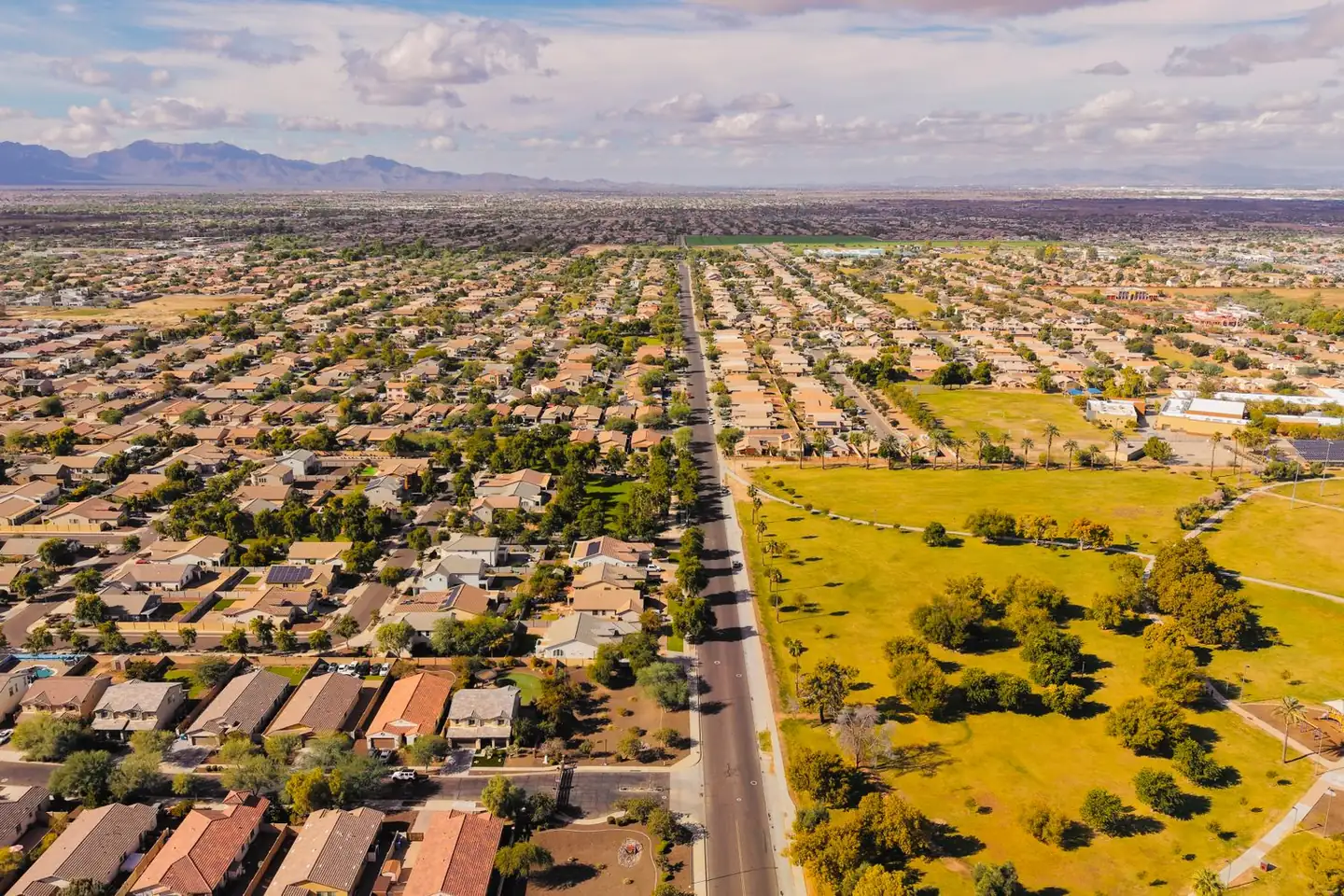
Foundation Repair Peoria AZ fixes settling slabs, post-tension slab cracks, sloping floors and sticking doors for homes in Peoria, AZ and across the West Valley. Most movement here starts when water from irrigation, a pool or plumbing leak, or monsoon runoff reaches dry desert soil, so every evaluation looks for the water source before anyone recommends piers or leveling.
What foundation settlement looks like in a Peoria home
Most calls start because a bedroom door stopped latching, a tile line cracked across the kitchen, or a gap opened between the baseboard and the floor. One of those signs on its own often turns out to be cosmetic. Several of them together, especially on the same side of the house, usually mean part of the slab has moved.
Peoria is really three housing markets, and each one fails in its own way. Around Old Town Peoria and the Grand Avenue corridor, many homes are 1950s to 1970s conventionally reinforced slabs with original cast-iron drain lines, so under-slab leaks and decades of lawn watering are the usual culprits. The middle of the city, including 55-plus neighborhoods like Westbrook Village near 83rd Avenue and Union Hills, is mostly 1980s and 1990s construction where drainage and settled flatwork are common. North Peoria, from Vistancia up toward Lake Pleasant Regional Park, was graded into foothills, and nearly every home sits on a post-tension slab over engineered fill pads.
Even the neighborhoods around the Peoria Sports Complex show the pattern. Homes there are mostly newer than Old Town but old enough that driveways, garage aprons and patio slabs have had fifteen or twenty summers to settle and crack.
Why desert soil moves even when it barely rains
It surprises people that a city with so little rain has foundation problems at all. The Arizona Geological Survey explains why: the state’s semi-arid climate produces both expansive soils that swell when wet and collapsible soils, which are loose, dry deposits that compress when they get wet or loaded. Soils mapped across much of the Peoria area are shallow and sit over a cemented caliche hardpan. When water concentrates in one spot, the thin soil above that hardpan can soften and drop while the rest of the slab stays put.
That’s why we treat water as the first suspect. A drip line running against the stem wall, a downspout that dumps onto bare dirt, a slow pool leak or a monsoon storm that ponds at the slab edge can each do more damage than years of dry weather. Skipping the water fix is the most common reason a repair fails.
Foundation repair services for Peoria homes
We match the repair to the cause, not the other way around. Most homes need one or two of these, not all of them.
- Slab foundation repair: stabilizing and, where it’s safe, lifting slab-on-grade homes that have settled.
- Post-tension slab repair: locating tendons with ground-penetrating radar, then repairing broken tendons or corroded anchors.
- Foundation crack repair: telling shrinkage cracks from structural movement, then sealing, injecting or stabilizing.
- Helical piers: torque-verified steel piers for additions, patios and lighter loads, or where access is tight.
- Push piers: steel piers driven under settling footings using the weight of the house.
- Concrete leveling: polyurethane foam lifting for sunken driveways, garage lips, walkways and pool decks.
- Foundation inspection: floor-elevation surveys, crack mapping and a written summary for owners, buyers and sellers.
- Drainage and soil stabilization: grading, downspout and irrigation fixes that keep water away from the slab.
How a foundation evaluation works
Every job starts with an on-site evaluation. We walk the outside first, looking at grading, downspouts, irrigation, the pool equipment and any cracks in the stem wall or stucco. Inside, we take floor-elevation readings across the house to find the high and low points, then map cracks and sticking doors against those readings. If the pattern suggests a leak, we’ll say so and recommend a plumber’s test before any structural work.
You get a plain-language explanation of what’s moving and why, plus the repair options that fit. Sometimes that’s foam leveling and a regraded side yard, sometimes an engineer’s pier layout, and sometimes the honest answer is that the crack is cosmetic.
Permits, licenses and subsidence: the paperwork side
Structural foundation work in Peoria usually needs a building permit. The city’s adopted building code, Peoria City Code §18-21, lists work that’s exempt from permits, and foundation repair isn’t on that list, though driveways and sidewalks near grade generally are. You can review requirements on the city’s Plan Review and Permits page, and work started without a permit can draw double fees.
Before you hire anyone, look the company up on the Arizona ROC Contractor Search and confirm the license class covers the job. It’s also worth knowing that the Arizona Department of Water Resources tracks a West Valley land-subsidence area that includes parts of Peoria, Glendale, Surprise and the Sun Cities. It’s slow, regional movement, but it’s one more reason to measure rather than guess.
Where we work around Peoria
Peoria is the hub, and we cover the communities that border it and the wider West Valley. That includes older slab homes in Glendale, the 55-plus streets of Sun City, newer post-tension tracts in Surprise, and hillside lots in Anthem. See every community we serve on the service areas page.
If you want to read up before you call, our foundation repair blog covers post-tension cracks, monsoon drainage, caliche, pier choices and what drives repair cost.
Foundation repair questions Peoria homeowners ask
What causes foundation problems in Peoria, AZ if it rarely rains?
Water reaching dry soil is the usual trigger. Irrigation, pool and plumbing leaks, and monsoon runoff can soak loose desert soil that then compresses, while clay pockets in some lots swell. Because much of Peoria has thin soil over caliche, water that concentrates in one spot settles that part of the slab while the rest stays put. Finding and fixing the water source is step one.
Are cracks in my post-tension slab normal?
Thin, stable hairline cracks are common in post-tension slabs and usually come from concrete shrinkage as it cures. Cracks that keep widening, show one side higher than the other, or appear alongside sloping floors and sticking doors are different. Those point to movement and deserve an evaluation, and nobody should drill into a post-tension slab without locating the tendons first.
Do I need a permit for foundation repair in Peoria?
Usually yes. Structural foundation repair such as piers, underpinning or footing work isn’t on Peoria’s permit-exempt list in City Code §18-21, so plan on a building permit and possibly an engineer’s plan. Leveling a driveway, sidewalk or patio slab near grade generally doesn’t need one. Confirm the details with Peoria Development Services before work starts.
How do I check a foundation contractor’s license in Arizona?
Search the company name on the Arizona ROC Contractor Search and confirm the license is active and the class covers foundation or structural work. Arizona requires a contractor’s license when a job’s labor and materials top $1,000 or when the work needs a permit, so the handyman exemption doesn’t cover permitted foundation repair.
Is foundation repair covered by homeowners insurance?
Usually not when the damage comes from gradual settlement, soil movement or poor drainage, which most policies exclude. A policy may cover damage caused by a sudden covered event, such as a burst pipe that floods the soil under the slab. Read your policy’s wording, and ask your agent before assuming either way.
Do I need piers, or can the slab just be leveled?
Piers are for a foundation that is still settling under the house, because they transfer the load to firmer material below. Foam leveling is for flatwork like driveways, patios and pool decks, or for filling voids once the cause is fixed. An evaluation with floor-elevation readings tells you which problem you actually have.
Is my area affected by land subsidence or earth fissures?
Parts of the West Valley, including Peoria, sit inside ADWR’s West Valley land-subsidence feature, and the Arizona Geological Survey maps earth fissures in areas such as the study area near Luke Air Force Base. You can check any address on the AZGS Natural Hazards Viewer. Regional subsidence is slow, so most home settlement still traces back to local water and soil.
What happens during a foundation evaluation?
We walk the exterior for grading, drainage, irrigation and leak signs, then take floor-elevation readings inside and map cracks and sticking doors against them. You get a plain explanation of what is moving and why, along with repair options that fit, which may be as simple as fixing drainage or as involved as an engineered pier plan.